
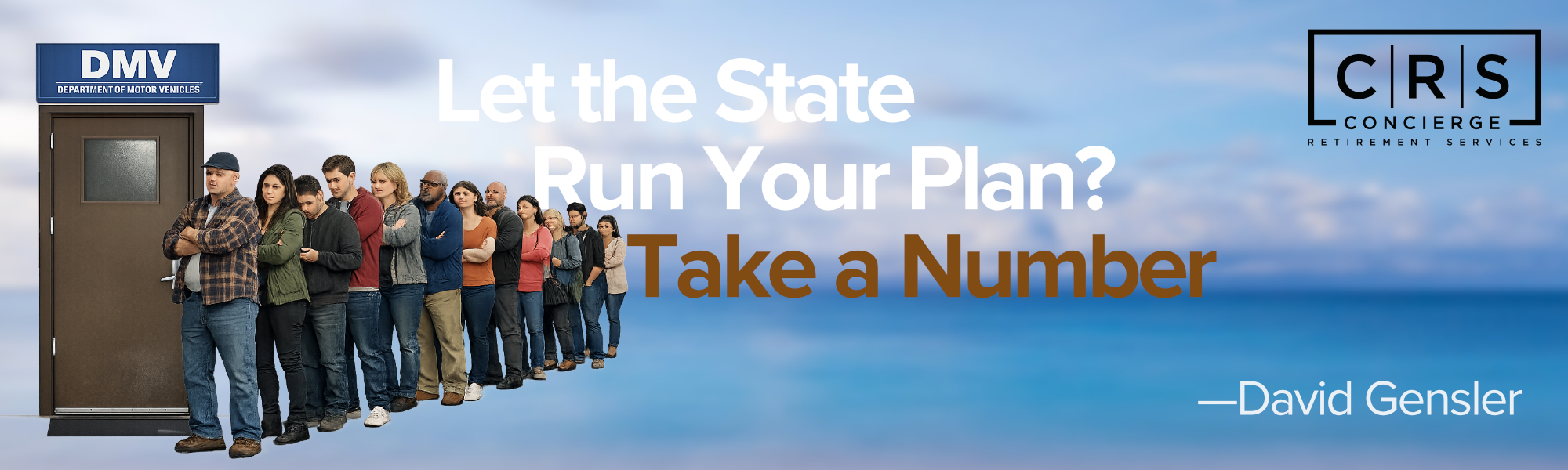
I’d been standing in line at the DMV waiting to renew my driver license for over an hour when the woman next to me sighed. “I always forget how slow this place is.”
I nodded. “The DMV has a unique relationship with time.”
“That’s one way to put it.”
We stood in silence for another moment, waiting for the line to inch forward. Eventually, she turned her gaze back to me. “What do you do while you wait for bureaucracy to grind you down?”
“I help companies run their retirement plans,” I said. “You?”
“HR manager,” she replied. “Mid-sized company. Manufacturing.”
That got my attention. “Busy time of year?”
“Always,” she said, “but especially now that the state retirement mandate is coming down the pipe. We don’t have a 401(k) plan and really never had a desire to implement one, so we’re not worried. We’re just going to sign up for the new state-run retirement plan and let them handle it. If the government wants everyone to have a retirement plan, they can run it—one less thing for us to manage.”
I gestured around us. “Out of curiosity—how has your experience with government-run programs been today?”
She looked at the line, then at the clerk window that had been vacant for the last ten minutes. “Painful. Inefficient. I took a day off work for this!”
I smiled. “And you expect the state-run retirement program to work any better?”
She opened her mouth, then stopped. “Well… I assumed….”
“That’s common,” I said, “but state-sponsored retirement programs tend to operate exactly like this—lots of rules, limited flexibility, and little customization. They meet the minimum requirements but that’s about it.”
She frowned. “So you’re saying I can expect a retirement-plan version of the DMV?”
“That’s a pretty fair comparison,” I said. “The plan technically works—eventually—but employees don’t get plan design options or meaningful education. Good luck getting questions answered, and when something goes wrong—and it will—you’ll find yourself back in line—figuratively and sometimes literally.”
She folded her arms. “We thought letting the government handle it would mean less liability.”
“It might feel that way,” I said, “until employees start asking questions you can’t answer or until you realize a private plan could have cost you very little—thanks to tax credits—and given your team something better.”
Her number was finally called. She stepped forward, then looked back at me. “If we wanted to look at alternatives… before we commit to anything?”
I handed her my card.